Monday, April 09, 2012

WEEK 11: 28TH MARCH 2012


Title : Do some research about the Relay and preparing                           presentation slides by using Microsoft Office PowerPoint.

Objective : 1) To study about the Relay.
                   2) Finishing the presentation slides and submits a                              draft to the Supervisor.
           
Content / Procedure : 1) Search about  Relay specification.
                                     2) Preparing the presentation slides and                                              do some editing on the proposal.
                   
Results / Analysis :
1) There are 4 parts in every relay:
·      Electromagnet
·      Armature that can be attracted by the electromagnet
·      Spring
·      Set of electrical contacts

2)   The following figure shows these four parts in action:
     
·        A relay consists of two separate and completely independent circuits.
·        The first is at the bottom and drives the electromagnet. In this circuit, a switch is controlling power to the electromagnet.
·        When the switch is on, the electromagnet is on, and it attracts the armature (blue).
·        The armature is acting as a switch in the second circuit.
·        When the electromagnet is energized, the armature completes the second circuit and the light is on.
·        When the electromagnet is not energized, the spring pulls the armature away and the circuit is not complete. In that case, the light is dark.

3)   Several variables to be control when purchasing relay :
·         The voltage and current that is needed to activate the                     armature.
·         The maximum voltage and current that can run through the             armature and the armature contacts.
·         The number of armatures (generally one or two).
·         The number of contacts for the armature (generally one or             two -- the relay shown here has two, one of which is                       unused).
·         Whether the contact (if only one contact is provided)                       is normally open (NO) or normally closed (NC).

Relay circuit diagram


A simple relay circuit

Conclusion: From the research, the relay 5V 5pins is suitable to                        be used in this project. It will act like a switch.

Sunday, April 08, 2012

WEEK 10: 20TH MARCH 2012


Title : Do some research and explore more about the Atmega                 IC’s.

Objective : To study about the Atmega IC’s.
           
Content / Procedure : Search about  Atmega IC’s specification.
                   
Results / Analysis :
Atmega 328 28pins 10-bit ADC

1)   Atmel's ATMega328 8-Bit Processor in 28 pin DIP package
2)   It comes with 32K of program space.
3)    23 I/O lines, 6 of which are channels for the 10-bit ADC.
4)   Runs up to 20MHz with external crystal.
5)   Package can be programmed in circuit.
6)   1.8V to 5V operating voltage.

Atmega328 28pins 10-bit ADC pin configuration

Conclusion: From the research, the Atmel’s ATMega328 8-Bit                          Processor in 28 pin DIP package IC’s will be used                          for Smart Chicken Coop program. 

WEEK 9: 12TH MARCH 2012


Title : Do some research and explore more about the Humidity               sensor.

Objective : To study about the Humidity Sensor.
           
Content / Procedure : Search about Humidity Sensor function                                            and operation principle.
                  
Results / Analysis :
Humidity Sensor
1)   A humidity sensor also called a hygrometer, measures and regularly reports the relative humidity in the air.
2)   A humidity sensor senses relative humidity. It measures both air temperature and moisture.
3)   Relative humidity, expressed as a percent, is the ratio of actual moisture in the air to the highest amount of moisture air at that temperature can hold.
4)   The warmer the air is, the more moisture it can hold, so relative humidity changes with fluctuations in temperature.

5)   The most common type of humidity sensor uses what is called “capacitive measurement.” This system relies on electrical capacitance, or the ability of two nearby electrical conductors to create an electrical field between them.

6)   The sensor itself is composed of two metal plates with a non-conductive polymer film between them. The film collects moisture from the air, and the moisture causes minute changes in the voltage between the two plates. The changes in voltage are converted into digital readings showing the amount of moisture in the air.

Conclusion: From the research, the Humidity sensor can be used                      in the Smart Chicken Coop to detect the moisture in                      the air. If the moisture is high, the light bulb will turn                       ON to maintain a suitable temperature for the chicks.

Thursday, March 29, 2012

WEEK 8: 4TH MARCH 2012


Title : Do some research and explore more about the LM35DZ.

Objective : To study about the LM35DZ.
           
Contents / Procedure : Search about the LM35DZ principle and                                          its functions.
                  
Results / Analysis :
1)   The definition :
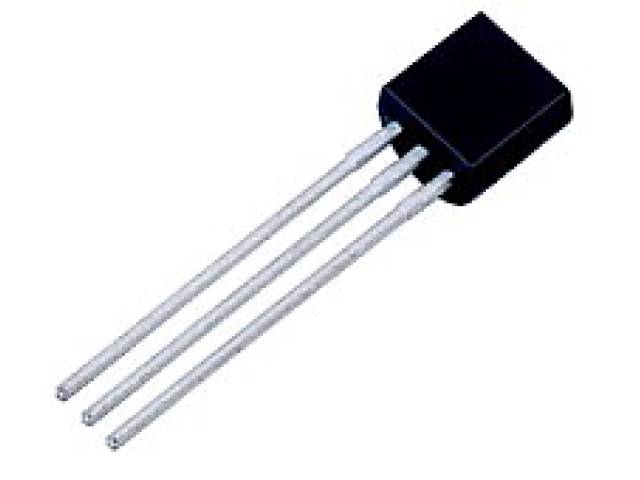
      LM35 is an integrated circuit sensor that can be used to measure temperature with an electrical output proportional to the temperature (in oC).
2)   The reasons why the LM35DZ will be use to measure temperature:
a)   It can measure temperature more accurately than a using a thermistor.
b)   The sensor circuitry is sealed and not subject to oxidation, etc.
c)   The LM35 generates a higher output voltage than thermocouples and may not require that the output voltage be amplified.
3)   The operation principle :
a)   It has an output voltage that is proportional to the Celsius temperature.
b)   The scale factor is .01V/oC
c)   The LM35 does not require any external calibration or trimming and maintains an accuracy of  +/-0.4 oC at room temperature and +/- 0.8 oC over a range of 0 oC to +100oC.
d)   Another important characteristic of the LM35DZ is that it draws only 60 micro amps from its supply and possesses a low self-heating capability. The sensor self-heating causes less than 0.1 oC temperature rise in still air.
4)   How to use the LM35DZ
a)   Need to use a voltmeter to sense Vout.
b)   The output voltage is converted to temperature by  a simple conversion factor.
c)   The sensor has a sensitivity of 10mV / oC.
d)   Use a conversion factor that is the reciprocal, that is 100 oC/V.
e)   The general equation used to convert output voltage to temperature is:
                                         i.    Temperature ( oC) = Vout * (100 oC/V)
                                        ii.    So if  Vout  is  1V , then, Temperature = 100 oC
                                       iii.    The output voltage varies linearly with temperature.

Conclusion: From the research, the LM35DZ can be used to                              measure the temperature for the Smart Chicken                              Coop.

WEEK 7: 29TH FEBRUARY 2012


Title : Do some research and explore more about the MaxSonar             Sensor.

Objective : To study about the MaxSonar Sensor.
           
Content / Procedure : Search about MaxSonar Sensor function                                          and operation principle.
                  
Results / Analysis :
The MaxSonar sensor
1)  The MaxSonar sensor is a range finders offers very short- to long-range detection and ranging in an incredibly small package with ultra-low power consumption.
2) It detects objects from certain range depends on its specification and provides sonar range information beyond certain range with a resolution.
3) The sensor provides three output interfaces, all of which are active simultaneously:
a)   digital pulse width output
b)   analog voltage output
c)   asynchronous serial digital output


Conclusion: From the research, the MaxSonar sensor can be                            used to indicate the level of the food when it is                                nearly empty.

WEEK 6 : 24TH FEBRUARY 2012


Title : Do some research and explore more about the Water                   Level Sensor.

Objective : To study about the Water Level Sensor.
           
Contents / Procedures : Search about the Water Level                                                            Sensor principle and its applications.
                  
Results / Analysis : 
1) The principle
     A low AC voltage is applied between the probe electrode and      the tank wall (or reference electrode in case of insulated tank).      When the water/liquid comes in contact with the electrode tip,        a conductive path is established between the sense electrode      and the tank wall/reference electrode. This current is sensed,        amplified and made to operate a relay whose contacts in turn        can be used for annunciation/control.

2) Applications
    The Water Level Sensor is to maintain a constant water level         avoiding material wastage in your process plant. Common             applications also include switching pumps on and off to avoid       overflow, dry running and indicating water level in an empty           tank to avoid wear and tear and production stoppage.

Conclusion: From the research, the Water Level Sensor, can be                        use to indicate the level of the water when                                        it is nearly empty.

Sunday, February 19, 2012

WEEK 5: 14TH FEBRUARY 2012


Title              : Do some research about the sensor characteristic.

Objective     : 1) To make sure that the sensor that been choose                               fulfill the Smart Chicken Coop function                                             requirement.
           
Procedure   : 1) Search about the Water Level Sensor, LM35DZ                              and Humidity Sensor characteristic.
                  
Results        : 

1) Water Level Sensor
-       For watering the chicks.
-       When the sensor detect the water is in LOW level, the water container will automatically refill.


           2) LM35DZ
                        -    For temperature controlling.
                        -    When the sensor detects the LOW                                                   temperature, the light bulb will turn ON.
                        -    When the sensor detects the HIGH                                                   temperature, the light bulb will turn OFF.


                                  3) Humidity Sensor
                       -    To provide good ventilation in chicken coop.
                       -    The Humidity sensor will detect the ability of air                                to hold moisture depends upon its                                                    temperature.
                       -    The level of humidity influences the ability of                                    the chicks to cool itself.

Conclusion     : From the research, the Water Level Sensor,                                   LM35DZ and Humidity Sensor are fulfilled the                                 Smart Chicken Coop function.